Quick answer:
What are black triangles between teeth?
Black triangle teeth are small dark gaps near the gumline where the gum no longer fills the space between neighbouring teeth. They’re usually caused by a mix of gum recession, gum disease, bone loss, natural tooth shape, tooth movement (such as after braces), and habits like aggressive brushing or smoking. These spaces can trap food, collect plaque, and affect your smile. Treatment can include improved cleaning and professional gum care, composite bonding, veneers, orthodontic adjustment, or specialist gum procedures, depending on the cause and how noticeable the gaps are.
Black triangles between the teeth are small dark spaces that appear when the gum tissue no longer completely fills the gap between neighbouring teeth. If you've noticed black gaps between your teeth or are wondering what causes black triangle teeth, they're often linked to changes in the gums, supporting bone, or tooth position. In this guide, we'll explain what black triangle teeth are, their causes, treatment options, and how to help prevent them.
What are black triangles between teeth?
Black triangle teeth are small triangular gaps that appear near the gumline when the gum tissue no longer fills the space between two teeth. These spaces are sometimes called open gingival embrasures in dentistry. They become visible when the gum tissue shrinks or pulls back, or when the teeth or supporting bone change shape or position. Research from the Dental Research Journal shows these spaces are fairly common in adults and can increase with age as gum tissues change over time.
What are the causes of dental black triangles?
Dental black triangles are usually caused by a mix of factors like the shape of your teeth, the thickness of your gums, your cleaning habits, and any history of gum problems or orthodontic treatment.
Tooth shape
Tooth shape can contribute to black triangles when teeth are narrower towards the gumline. When the contact point between teeth is closer to the biting edge and the teeth taper towards the gum, it leaves more space for a gap to appear if the gum shrinks even slightly.
Bone structure
Bone structure around the teeth can cause black triangles by affecting how well the gum can fill the spaces between them. The supporting bone helps keep the gum at the right height; when the bone is naturally thinner or positioned lower between teeth, there is less support for the gum tissue in that area.
Gum disease
Gum disease can cause black triangles when inflamed gums gradually lose their tight, full shape around the teeth. Gum disease is a condition where plaque and bacteria irritate the gums, leading to redness, swelling, and bleeding. Over time, if not treated, it can damage the supporting tissues.
Bone loss
Bone loss (reduction in the height or thickness of the bone that supports the teeth, often linked to long-term gum disease) can lead to black triangles when the supporting bone around teeth is reduced. Bone loss in the jaw can occur because of long-standing gum disease, trauma, or other conditions that affect the supporting structures. When bone levels drop between teeth, the gum above it often follows.
Tooth movement
Tooth movement, such as after orthodontic treatment, can cause or reveal black triangles when teeth are repositioned. When crowding is corrected and teeth are straightened, the contact points and angles between teeth change. This can uncover pre-existing loss of gum or bone or create new spaces where the gum cannot completely fill the gap.
Poor oral hygiene
Poor oral hygiene can cause black triangles by allowing plaque to build up around the gumline. Oral hygiene is the daily care you take to keep your mouth clean, including toothbrushing and interdental cleaning. If this is not done thoroughly, plaque and bacteria can trigger gum inflammation.
Lifestyle and habits
Lifestyle and habits can lead to black triangles when they irritate or stress the gums and supporting tissues. Smoking, for example, affects the blood supply to the gums and can increase the risk of gum problems and recession.
Habits such as aggressive toothbrushing, clenching or grinding, or using toothpicks roughly between teeth can also irritate the gum and contribute to changes in the papilla.
Health conditions
Health conditions can contribute to black triangles when they affect the gums, bone, or your overall healing response. Certain systemic conditions and medications may influence how the gums react to plaque (a soft, sticky film of bacteria that constantly forms on teeth and along the gumline) or injury, or how well they recover.
What are the signs of black triangles?
Black triangles are usually easy to spot as dark spaces at the gumline between teeth, but they can also cause other symptoms. The main sign is a visible gap where the gum used to fill the space fully.
Common signs and symptoms can include:
Noticeable dark or shadowed gaps near the gumline between teeth
Food getting stuck more easily between teeth
Increased plaque build-up in these spaces
Mild sensitivity to hot or cold in the exposed areas
Changes in speech or whistling through gaps in some cases
A simple way to think about this is: if you can see triangular spaces between your teeth near the gums that were not there before, or if you suddenly trap food in these areas more often, it is worth asking your dentist to check what is happening.
How to treat black triangles between teeth?
A healthy mouth depends on both effective plaque removal and healthy gums. In a 2026 independent network meta-analysis, researchers compared multiple manual and powered toothbrush technologies across 19 clinical studies. Oscillation rotation, the cleaning technology behind Oral-B iO achieved the highest ranking for both plaque and gingivitis reduction, making it the top-ranked technology in the analysis.
Treatment for black triangles include improved gum care and cleaning, or cosmetic and restorative dental treatments depending on the underlying cause and how noticeable the gaps are:
Improved cleaning and professional gum care: Your dentist or hygienist may focus first on controlling plaque and inflammation. Careful cleaning, advice on technique, and professional scaling can stabilise the gums and stop the spaces from worsening.
Composite bonding: Tooth-coloured filling material can sometimes be shaped to adjust the contact area between teeth, making the gap look smaller. This is a minimally invasive approach, but it requires careful design to avoid trapping plaque.
Veneers or crowns: In some cases, ceramic veneers or crowns can be used to reshape the visible part of the teeth and close or reduce the black gaps. This is more invasive and usually reserved for more significant aesthetic concerns.
Orthodontic adjustment: If tooth position is a major factor, further orthodontic treatment or refinement may help bring teeth closer in the right area, making it easier for the gum to fill the space. This needs careful planning to avoid worsening gum support.
Gum-related procedures: In selected cases, a periodontist may consider surgical or minimally invasive procedures aimed at reshaping the gum or improving papilla height. These techniques are complex and not suitable for everyone, but may be an option in specific situations.
Should I see a dental professional for black triangles?
You should see a dental professional if you notice new black gaps between teeth, especially if they are getting bigger, trapping food, or coming with gum soreness or bleeding. A dentist or periodontist can work out whether the spaces are mainly cosmetic or a sign of underlying gum or bone changes.
How can Oral-B help you prevent and manage black triangles?
Oral-B can help you prevent and manage black triangles by supporting a thorough, gentle cleaning routine that looks after your gums as well as your teeth. While not every case can be prevented, keeping plaque under control and caring for your gums can reduce the risk of further gum recession and new gaps forming.
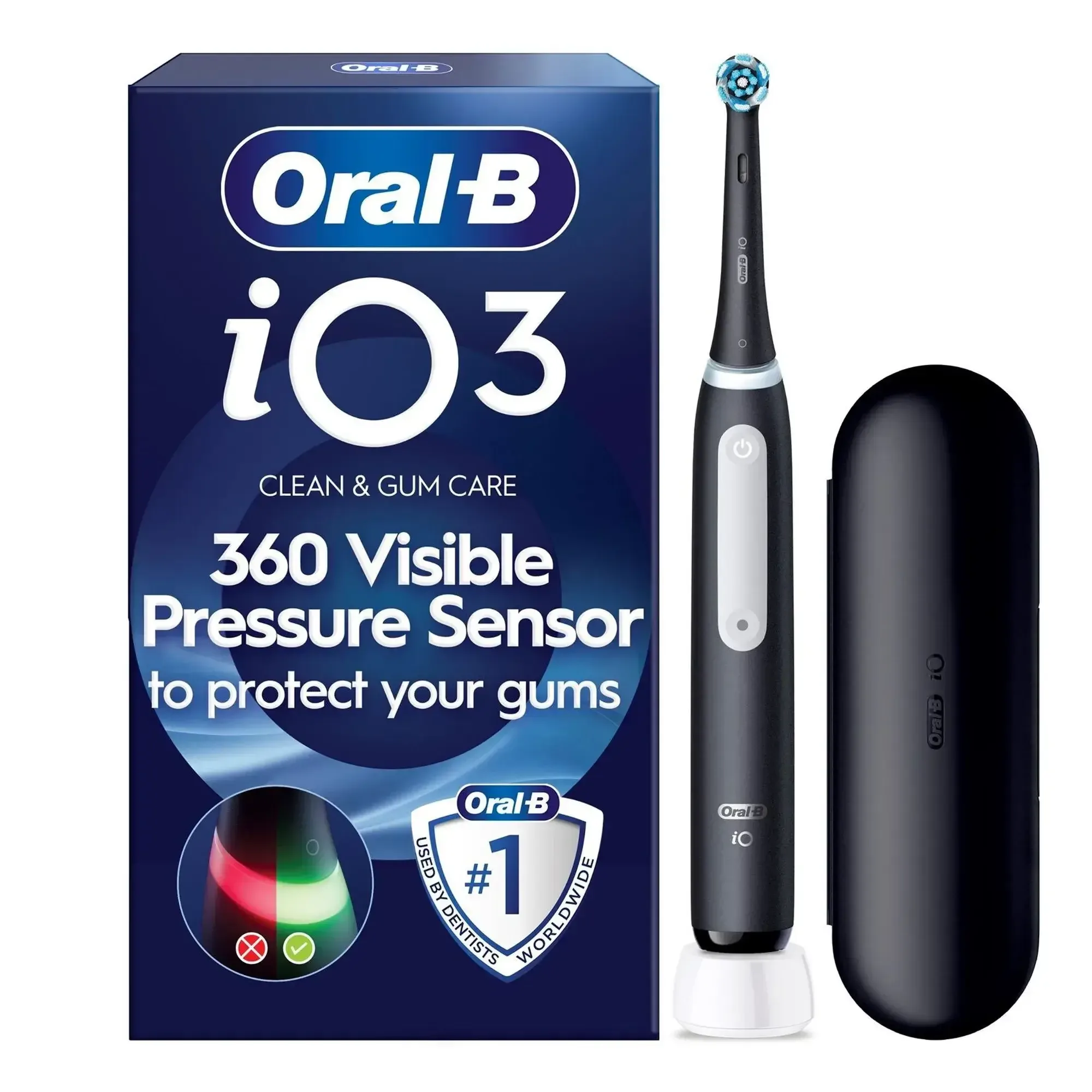
Using the Oral-B iO Electric Toothbrush Series can make it easier to clean along the gumline effectively. Its advanced technology is designed to remove plaque while being gentle on gums, which is important if you have areas that are already sensitive or slightly receded.
Pairing your toothbrush with Oral-B's toothpastes, including options that support gum health, can further protect the tissues around your teeth.
FAQs about black triangles
Can black triangles lead to bad breath?
Yes. Black triangles between teeth can trap food and plaque more easily, creating areas where bacteria can build up and contribute to bad breath if they aren't cleaned thoroughly.
Are black triangles the same as gum recession?
Not exactly. Gum recession can be one of the causes of black triangle teeth, but the two terms aren't interchangeable. A black triangle is the visible gap, while gum recession describes the movement of the gum tissue itself.
What’s the best way to clean teeth when you have black triangles?
Keeping black triangle teeth clean requires gentle brushing along the gumline and daily interdental cleaning to remove trapped plaque and food debris.
Is it normal to develop black triangles as I age?
Yes, it’s quite common. As you age, natural gum recession and some bone loss can occur, leading to these small gaps where the gums no longer fully fill the space between teeth.