What Causes Cavities?
Plaque and Acid
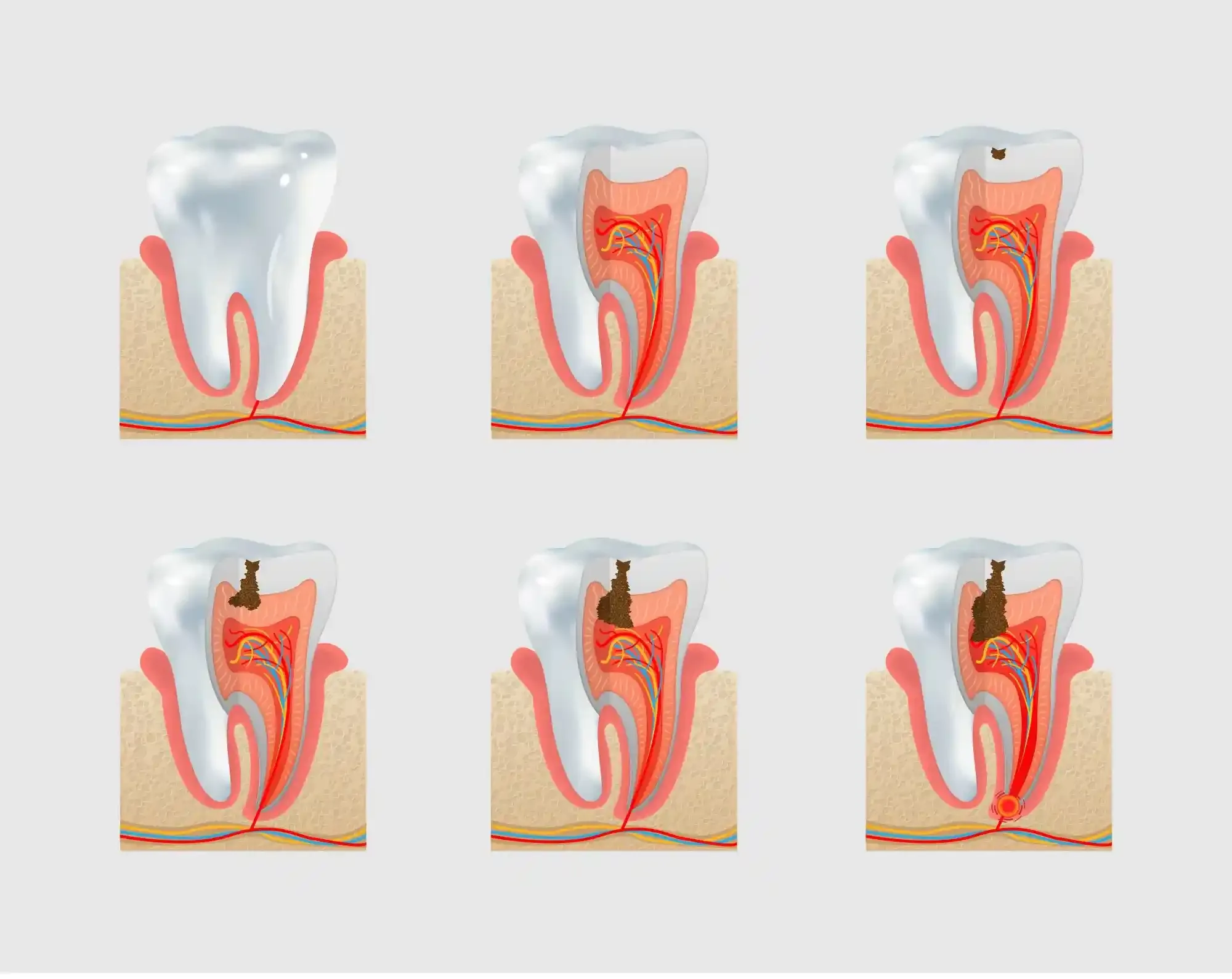
The main cause of cavities is the plaque that builds up on your teeth and the acids produced by bacteria forming plaque.
How does plaque start? Bacteria in your mouth accumulate to form plaque, a soft, sticky, colorless or pale-yellow film. Plaque produces lactic acid that eats away at the protective enamel on your teeth and leads to tooth decay and cavities.
Diet
Another major cause of cavities is your diet — especially sugary, starchy foods and drinks. These provide glucose that feeds the bacteria forming plaque. Sugary, starchy foods and drinks do two things that contribute to plaque formation (and, eventually, cavities):
They serve as a source of energy for bacteria
They provide a sticky place where bacteria can gather
Here are some common foods and drinks that contribute to cavities and tooth decay:
Soft drinks
Juice
Candy
Bread
Pasta
Potatoes
Citrus fruits
Tomatoes
Coffee
Tea
Dried fruit
Cheese
Milk
Ice Cream
While it’s important to maintain a healthy diet, you can still occasionally enjoy these foods and not worry about tooth decay if you maintain a good oral hygiene routine.
Poor Oral Hygiene
Poor oral hygiene makes you more prone to cavities and tooth decay. Plaque needs to be removed every day to prevent it from accumulating in your mouth and causing problems.
We recommend using an electric toothbrush, followed by flossing and rinsing with an antibacterial mouthwash.
Dry Mouth
Dry mouth is a condition (or, sometimes, a symptom of a condition) caused by reduced saliva production.
Without enough saliva, your body can’t neutralize the acids in your mouth as effectively. Plaque can more easily build up on your teeth, leaving you vulnerable to tooth decay and cavities.
Dry mouth may be a sign of a medical issue, so talk to a doctor or dentist about possible treatments.
Receding Gums
If you have receding gums, plaque can form near the roots of your teeth, which are more vulnerable to decay because they’re not protected by enamel.
To prevent cavities under these circumstances, it’s especially important to maintain a good oral hygiene routine, so plaque doesn’t build up on the unprotected parts of your teeth.