Brushing little ones can feel like a daily battle, and choosing between an electric vs manual toothbrush for kids adds one more decision. Both can work well, so the right choice often comes down to your child’s age and how thoroughly they brush. A research of Davidovich et al. published in 2020 links round electric brushes with cleaner teeth and better odds of being cavity-free in young children, but technique, toothpaste and a grown-up’s help matter just as much. In this article, we compare the two, explain which age suits which brush and share brushing tips.
Why Do Baby Teeth Need a Thorough Clean?
Baby teeth need a thorough clean because they can still decay and cause pain, even though they fall out. Plaque is a sticky film of bacteria that builds up on teeth every day, and brushing removes it. When dental plaque stays put, cavities can start.
Cavities are the #1 most preventable disease in children.1 Children with tooth decay in their baby/milk teeth are 4× more likely to have decay when they are older.2 Our guide to cavities in baby teeth explains how to spot them.
Wobbly, gappy or overlapping teeth are also harder to clean, because plaque finds places to hide. That is why brushing technique matters at this age.
Electric vs Manual Toothbrush for Kids: What Does the Research Say?
Research links round electric toothbrushes with cleaner teeth and better odds of being cavity-free in young children, but it shows an association, not cause. Kids using a round electric toothbrush have 40% better odds of being cavity-free.3
[The Davidovich evidence includes P&G-affiliated authors. An independent 2025 systematic review has therefore also been included in Sources to provide additional evidence balance. The claim is framed as an association rather than proof of causation.]
That figure comes from a records-based study of 998 children aged 2.5 to 7, so it cannot prove the brush alone made the difference. A 2025 systematic review of trials in children also found better plaque scores with power brushes. A trial of 41 children aged 8 to 11 found the same.
None of this makes a manual brush a poor choice. It suggests a round electric head can make thorough brushing easier.
Where Does a Manual Toothbrush Still Work Well?
A manual toothbrush works well for babies and toddlers, and for any child whose teeth you can clean thoroughly. Electric brushes are not recommended for under-3s, so an electric toothbrush for toddlers is not the right choice yet.
The best toothbrush for baby teeth is a soft one with a small head that suits your child’s age, used with a smear of fluoride toothpaste.
Where a manual brush can fall short is time and technique. Two minutes is a long time for a wriggly child, and it is easy to miss the back teeth.
How Does an Electric Toothbrush Help Children Brush Better?
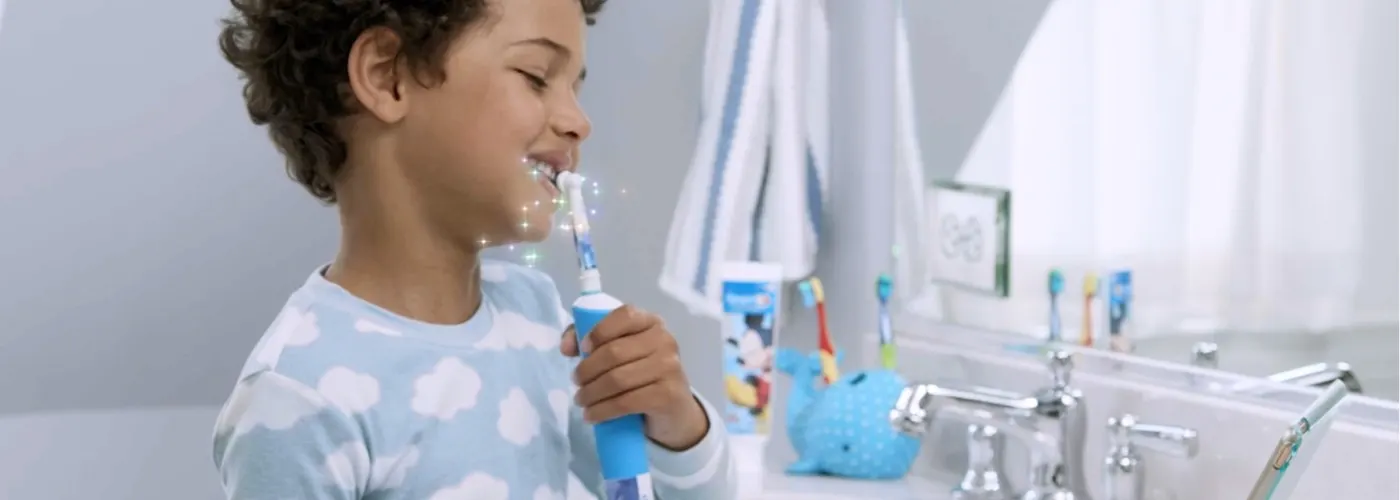
A round brush head, a built-in timer and an app can help children clean more thoroughly and brush for longer.
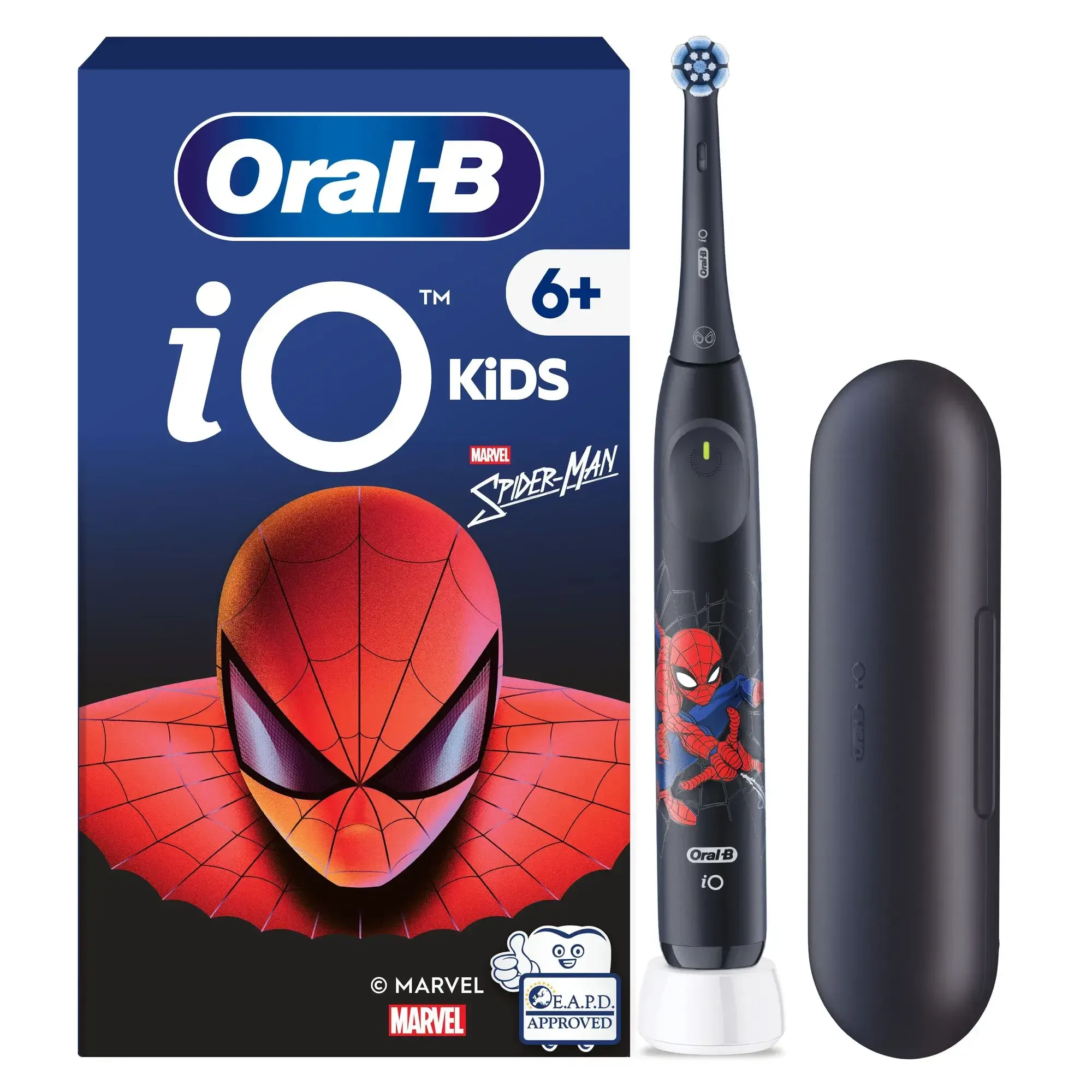
Oral-B iO Kids, made for ages 6 and over, has:
Powerful Cavity Protection: cleaner teeth4 in hard-to-reach places where cavities start
It removes more plaque than a regular manual toothbrush.5
A 2-minute music timer that plays a short melody when the time is up
With the iO Kids, more than 80% of parents say their child is more motivated to brush twice a day for two minutes.6 Plus, 90% of kids brush longer when using the Disney Magic Timer App.7
What Age Can a Child Use an Electric Toothbrush?
Electric brushes are not recommended for under-3s, and Oral-B’s kids’ electric brushes start from age 3. Until then, a soft manual brush is the right choice. See our guide to electric toothbrushes for kids for more. Here is a simple guide by age:
Age | Brush | Toothpaste |
|---|
First tooth to under 3 | Soft, small-headed manual brush, used by an adult | A smear of fluoride toothpaste |
3 to 5 | Soft manual brush, or a first electric brush made for ages 3 and over | A pea-sized amount |
6 and over | Manual brush, or a round-head electric brush made for ages 6 and over | A pea-sized amount at 6. From 7, toothpaste with 1,350 to 1,500ppm fluoride |
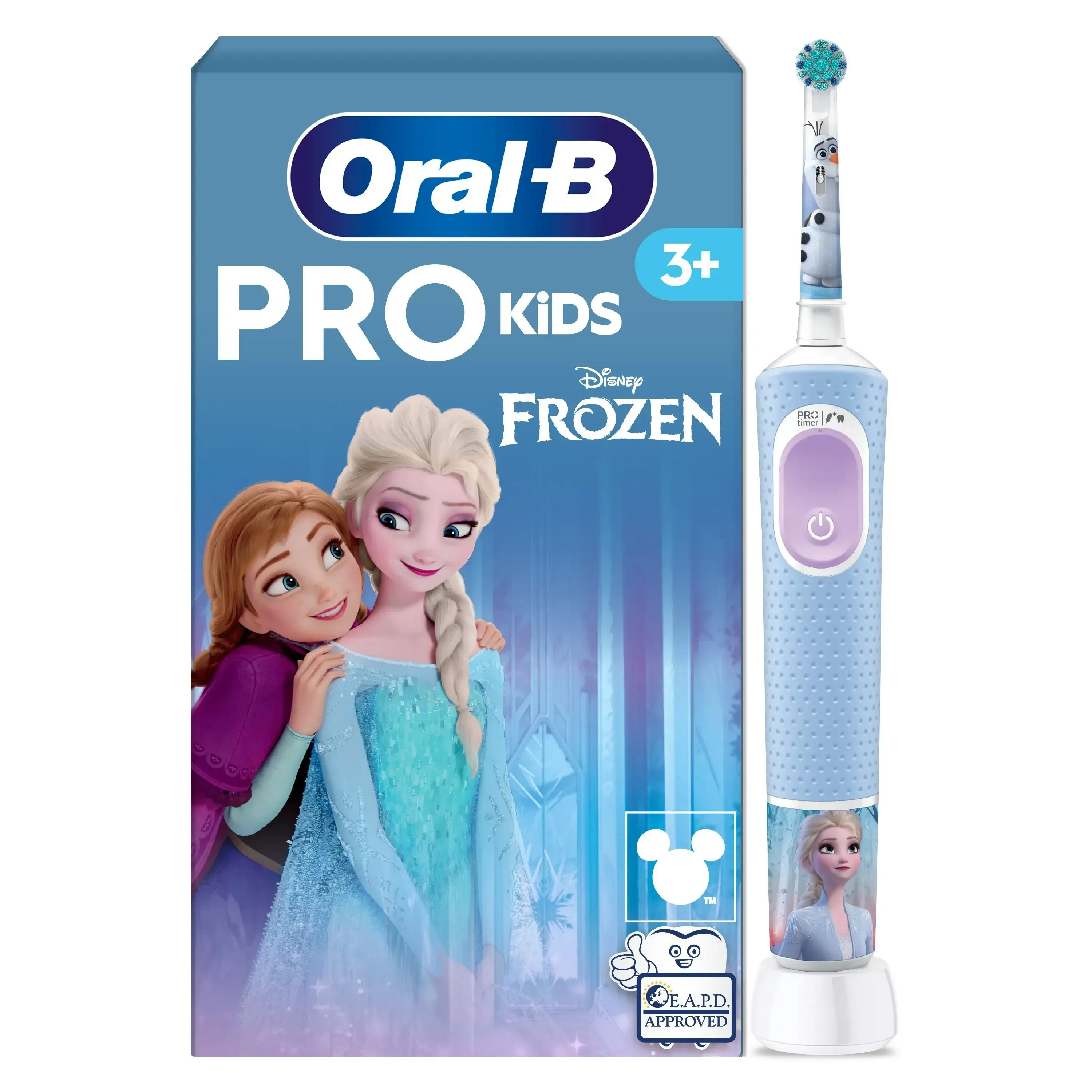
Oral-B PRO Kids is made for ages 3 and over. It has:
Small round brush head with soft bristles designed with dentists, uniquely for milk teeth8
Approved by the European Academy of Paediatric Dentistry as of 3 years old9
[The 3+ age is based on Oral-B PRO Kids product guidance and EAPD endorsement for use from three years old. It is not presented as a general NHS starting age for electric toothbrushes.]
Is an Electric Toothbrush Too Harsh for Little Teeth?
Usually not. A brush made for your child’s age, used with a light touch and a grown-up’s help, is designed to be gentle. Both Oral-B Kids electric brushes have an ultra-gentle mode.
The 6+ brush mentioned earlier also has a feature for heavy-handed little brushers:
Some children take a little while to get used to the buzz. These steps can help:
Let your child hold the brush while it is switched off.
Switch it on and try it on their hand first.
Start in the gentlest mode and let the brush do the work.
Guide it slowly from tooth to tooth, without scrubbing.
Praise them, and build up to the full two minutes.
What Are the Best Tips for Brushing Children’s Teeth?
Whichever brush you choose, brush for about 2 minutes twice a day with fluoride toothpaste, including last thing at night. The NHS advises this, and the UK guidance Delivering Better Oral Health also recommends spitting out the excess toothpaste.
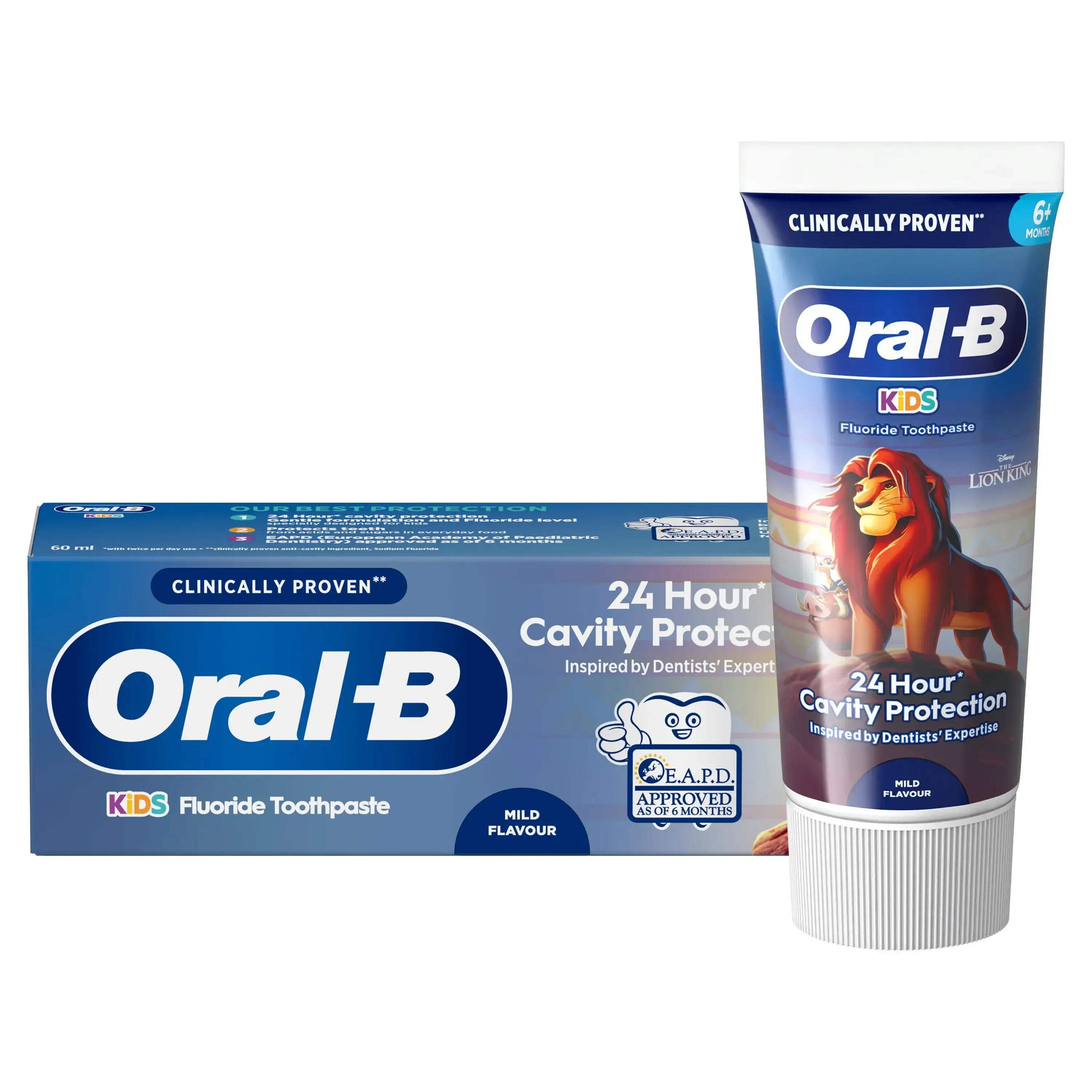
Use the right amount of fluoride toothpaste for their age. Our kids' toothpaste comparison chart can help you compare.
Spit out but do not rinse, so the fluoride keeps working.
Use small, circular movements, and gently brush the gums and behind the teeth.
Supervise brushing until at least age 7, as Childsmile advises.
Use a timer to reach about 2 minutes.
Visit the dentist when the first milk teeth appear, or before 12 months. NHS dental care for children is free.
The Bottom Line
So, are electric toothbrushes better for kids? Research links round electric brushes with better odds of being cavity-free, but a manual brush still works when it is used thoroughly. The best choice is the one your child will use for two minutes, twice a day.
Match the brush to your child’s age, use the right amount of fluoride toothpaste, spit out without rinsing and keep helping until at least 7. Small improvements add up.
If you would like some help, the Oral-B Kids range includes electric toothbrushes made for children aged 3 and over. Browse Oral-B kids toothbrushes to find the right fit for your child’s age.
FAQs
Are electric toothbrushes better for kids than manual ones?
They can be. Research links round electric brushes with better odds of being cavity-free, but a manual brush works well when it is used thoroughly for two minutes with fluoride toothpaste and a grown-up’s help. Choose the one your child will use consistently, and ask your dentist if you are unsure.
What age can a child use an electric toothbrush?
Oral-B’s kids’ electric brushes start at age 3. Electric brushes are not recommended for under-3s, who do best with a soft manual brush and a smear of fluoride toothpaste. Always check the age on the pack, and supervise brushing until your child is at least 7.
Can toddlers under 3 use an electric toothbrush?
Electric toothbrushes are not recommended for under-3s. Use a soft, small-headed manual toothbrush with a smear of fluoride toothpaste, and brush your toddler’s teeth for them twice a day. At 3, you can think about a first electric brush made for that age.
Is an electric toothbrush safe for baby teeth?
Yes, when the brush is made for your child’s age. Keep a light touch, use the gentlest mode and supervise every brush. Electric brushes are not recommended for under-3s, so use a soft manual brush until then. Ask your dentist if you have any concerns.
How much toothpaste should my child use?
Use a smear of fluoride toothpaste under 3, and a pea-sized amount from 3 to 6. Check the fluoride strength on the box, brush for about 2 minutes twice a day, then spit out without rinsing. From 7, use toothpaste with 1,350 to 1,500ppm fluoride.
Footnotes & References
1 Oral-B Kids range product information.
2 Hall-Scullin E, et al. J Dent Res. 2017.
3 Kids using a round electric toothbrush vs. a manual toothbrush. Davidovich E, Grender J, Zini A. Int J Environ Res Public Health. 2020;17(22):8595.
4 vs. a regular manual toothbrush.
5 Oral-B iO Kids (6+) product information. Comparison is versus a regular manual toothbrush.
6 Based on a home use test among 120 kids, Germany, October 2024.
7 Disney Magic Timer App can be used with Oral-B iO Kids and Oral-B PRO Kids. Oral-B product information.
8 Oral-B PRO Kids (3+) product information.
9 Oral-B PRO Kids (3+) product information.
10 Oral-B iO Kids (6+) product information.