Introduction
Plaque accumulation remains the primary driver of gingivitis and a key risk factor for the development of oral diseases.
While electric toothbrushes have long demonstrated advantages over manual brushing, dentists and consumers are increasingly interested in understanding which powered toothbrush technology delivers the greatest clinical benefit.
A recently published independent network meta-analysis in the reputable peer reviewed journal Clinical Oral Investigations sought to answer this question by comparing the efficacy of multiple toothbrush technologies within a single evidence framework. The analysis assessed plaque and gingivitis outcomes across several powered and manual toothbrush categories, providing one of the most comprehensive comparative evaluations available to date.
Study Overview
The study published in 2026, systematically reviewed randomized controlled trials comparing:
The final analysis included 19 randomized controlled trials involving more than 1,300 participants. Outcomes focused on validated measures of plaque accumulation and gingival inflammation.
The investigators applied a frequentist random-effects network meta-analysis methodology, allowing direct and indirect comparisons across technologies and enabling ranking of the different toothbrush categories.
Study Snapshot | |
|---|
Publication | Clinical Oral Investigations (2026) |
Study Type | Independent Network Meta-Analysis |
Studies Included | 19 Randomised Controlled Trials |
Participants | 1,300+ subjects |
Technologies Compared | Oscillating-Rotating (including OralB iO), Sonic (including Phillips), Ultrasonic, Other Electric, Manual |
Primary Endpoints | Plaque Reduction & Gingivitis Reduction |
Plaque Ranking | #1 Oscillating-Rotating (SUCRA 89.2%) |
Gingivitis Ranking | #1 Oscillating-Rotating (SUCRA 86.5%) |
Key Take Aways | Oscillating-Rotatingtoothbrushes, the technology behind Oral B iO round brush head was ranked first for plaque reduction and for gingivitis reduction. The authors concluded that this technology could be the preferred choice for improved oral hygiene |
Study Authors | Chenchen Luo, Nanyu Chen, Qiuyu Jing, Saidi Hu, Siran Wan, Shunhong Zhang, Guangyue Liu, Nian Li & Lin-Yong Zhao |
What the Study Found
Oscillating-Rotating Technology Ranked First for Plaque Reduction
Among all toothbrush technologies evaluated, oscillating-rotating technology achieved the highest probability of being the most effective for plaque reduction, receiving a SUCRA (Surface Under the Cumulative Ranking Curve) score of 89.2%.
For context, sonic technology ranked second, indicating a lower probability of being the most effective intervention for plaque control. The analysis also found a significant advantage for oscillating-rotating technology compared with manual brushing.
Oscillating-Rotating Technology Ranked First for Gingivitis Reduction
The superiority of this technology was not limited to plaque control. The same technology also achieved the highest ranking for gingivitis reduction, obtaining a SUCRA score of 86.5
Again, sonic technology ranked second, with a gingivitis SUCRA score of 70.1%. Other powered toothbrush technologies and manual toothbrushes ranked below both oscillating-rotating and sonic categories.
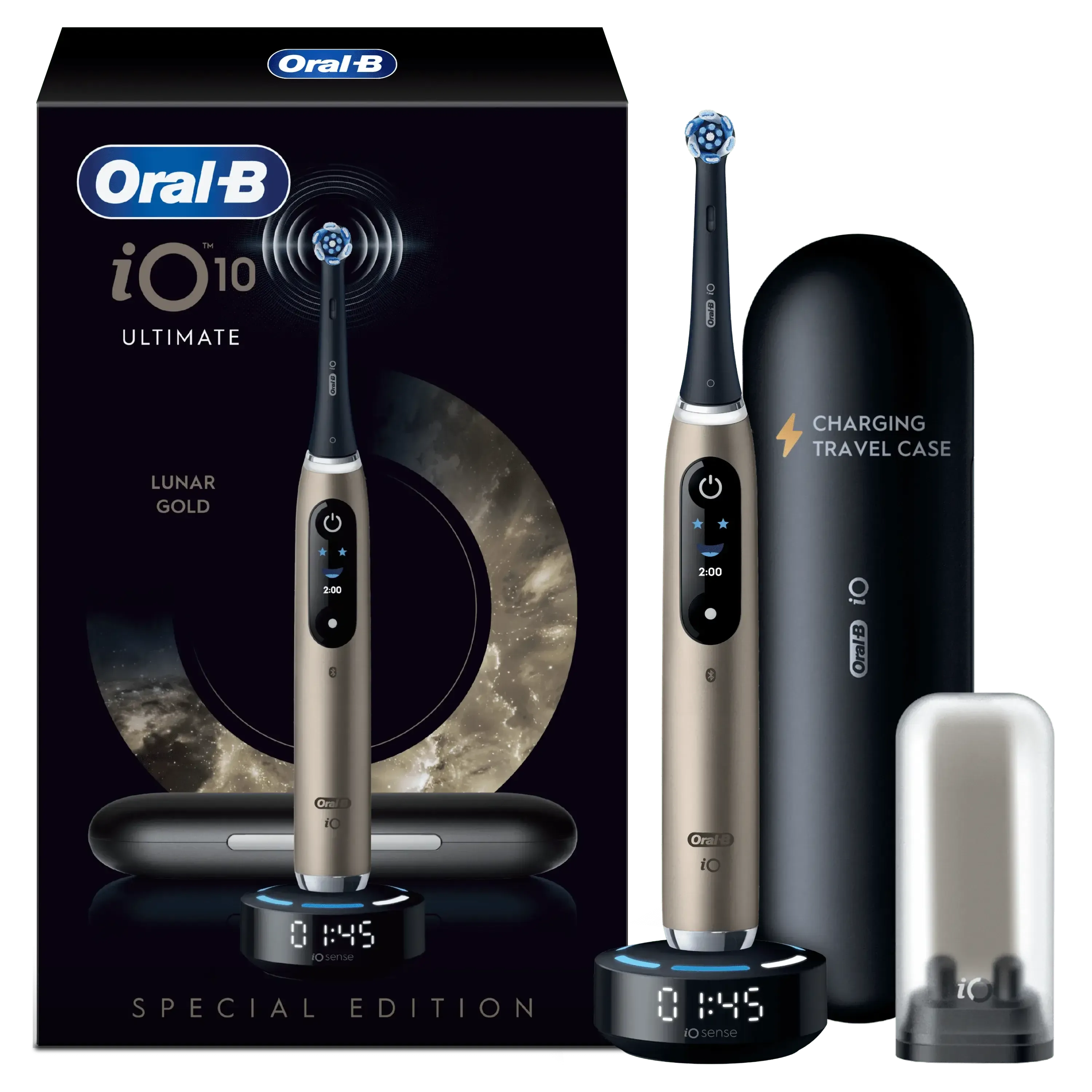
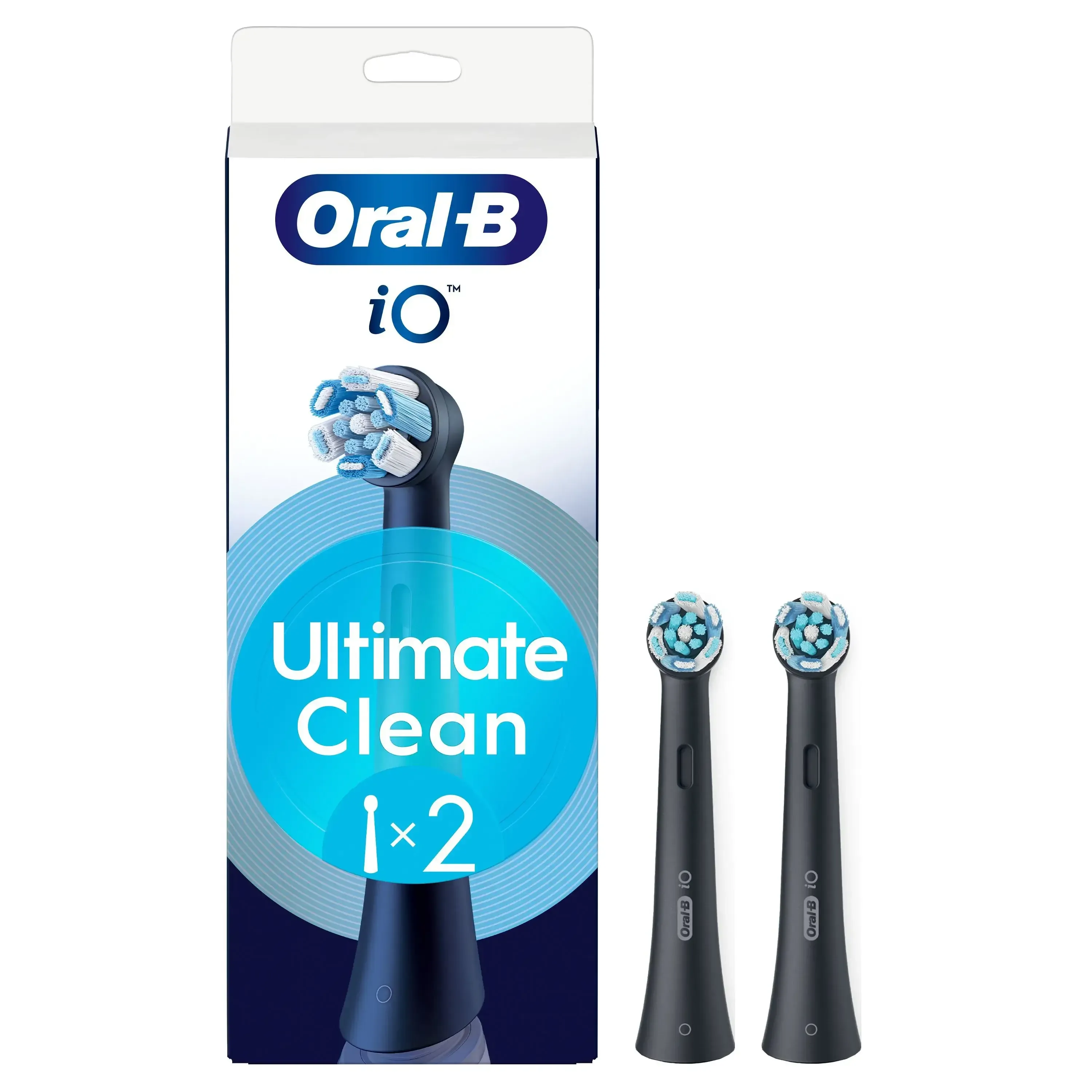
The consistent leadership of oscillating-rotating technology (the technology used in OralB iO) across both key clinical endpoints strengthens the overall scientific evidence supporting its oral-health benefits.
Why These Findings Matter
Most studies compare only two technologies at a time. In contrast, a network meta-analysis integrates evidence from multiple randomized trials and enables comparison across a larger set of interventions.
As a result, the study provides a broader evidence-based view of how toothbrush technologies perform relative to one another. Importantly, the findings were consistent across different study designs, with O-R (oscillating-rotating) technology maintaining the highest ranking in both single-use and longer-term home-use studies. These findings suggest that the clinical benefits associated with O-R technology are not limited to a particular study design or duration of use.
Authors' Conclusion
Based on the available evidence, the researchers concluded that oscillating-rotating toothbrushes (such as Oral B iO) demonstrated the highest probability of being among the most effective interventions for reducing plaque and gingivitis. They further stated that O-R technology may be considered a preferred choice for improving oral hygiene. The study highlighted particularly strong benefits for children and orthodontic patients. Children often require additional support to achieve effective plaque removal as they develop brushing skills, while orthodontic appliances can make thorough cleaning more difficult and increase the challenge of maintaining optimal oral hygiene.
Scientific Interpretation
The study adds a significant independent evidence layer to the body of literature supporting oscillating-rotating technology. Unlike brand-specific clinical trials, this analysis evaluated technology categories using a broad collection of randomized controlled studies and was published in a peer-reviewed scientific journal. Those findings are consistent with 5 additional independent meta-analyses published since 2020 that support Oral-B round-head oscillating-rotating technology. The 2026 EFP/EADPH consensus white paper, published in Periodontology 2000, reaffirmed that oscillating-rotating technology has the most robust and consistent evidence base for reducing plaque and gingivitis.
What is the best toothbrush technology for gingivitis?
Healthy gums start with effective plaque removal. In a 2026 independent network meta-analysis published in Clinical Oral Investigations, oscillating-rotating toothbrush technology (the technology used in the Oral-B iO round brush head) ranked highest for gingivitis reduction among the toothbrush technologies evaluated. The analysis reviewed 19 randomized controlled trials involving more than 1,300 participants and compared manual, sonic, ultrasonic, and other powered toothbrush technologies.
Which electric toothbrush technology is best for plaque removal?
In the 2026 peer-reviewed network meta-analysis, oscillating-rotating toothbrush technology (the technology used in the Oral-B iO round brush head) ranked highest for plaque reduction among the technologies evaluated. The evidence base included 19 randomized controlled trials and more than 1,300 participants.
Why does it matter that this study was published in Clinical Oral Investigations?
Clinical Oral Investigations is an international peer-reviewed scientific journal that publishes clinical and research studies in oral health and dentistry. Publication in a peer-reviewed journal means the research methodology, analysis, and findings were evaluated by independent experts before publication. The 2026 network meta-analysis, which compared major toothbrush technologies across 19 randomized controlled trials involving more than 1,300 participants, was published in Clinical Oral Investigations, providing an independent and scientifically reviewed source of evidence for the study findings.
What is a network meta-analysis?
A network meta-analysis combines evidence across multiple clinical trials so researchers can compare and rank several interventions within one evidence network, using direct and indirect comparisons.
What does “ranked highest” mean?
The researchers used SUCRA, a scientific ranking measure. A higher SUCRA value indicates a higher probability of being among the best-ranked interventions in the analyzed evidence network.
Sources:
Luo, C., Chen, N., Jing, Q. et al. Comparative efficacy of electric toothbrush technologies in plaque and gingivitis reduction: a network meta-analysis. Clin Oral Invest 30, 270 (2026). https://doi.org/10.1007/s00784-026-06955-z
Additional study evidence:
1 Thomassen T, Van der Weijden FGA, Slot DE. Int J Dent Hyg2022;20:3-17. doi:10.1111/idh.12563
2 Elkerbout, TA, et al. Int J Dent Hygiene. 2020; 18: 17– 26. https://doi.org/10.1111/idh.12401
3 Clark-Perry et al. JADA,Volume 151, Issue 4, 2020, 265-275.e6,ISSN 0002-8177,https://doi.org/10.1016/j.adaj.2019.12.012
4 van der Sluijs, et al Int. J. Dent. Hygiene. 2021; 19: 78– 92. https://doi.org/10.1111/idh.12463
5 van der Sluijs E, Slot DE, Hennequin-Hoenderdos NL, Valkenburg C, van der Weijden F. Int J Dent Hyg2022. doi:10.1111/idh.12597