What Exactly Is a Cavity?
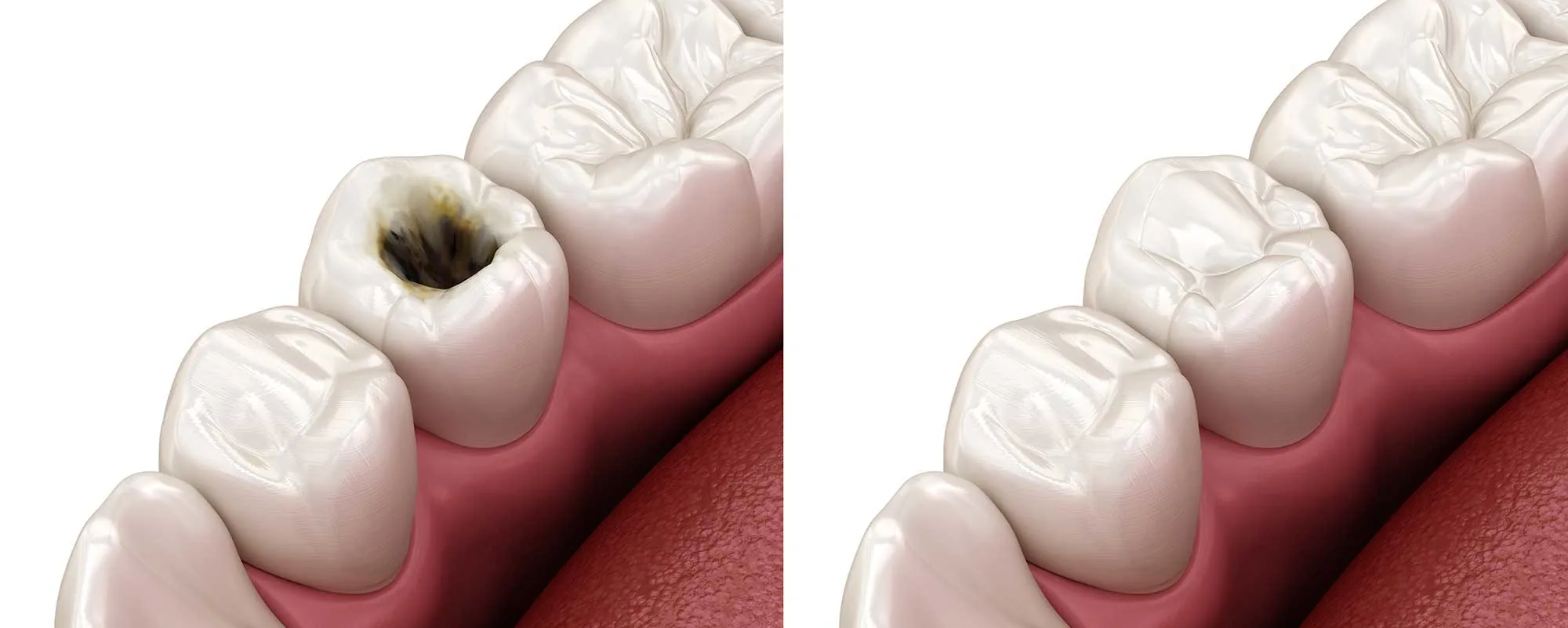
A cavity is an area of permanent damage in the enamel, the hard outer layer of the tooth. Cavities are the result of tooth decay, which occurs when acids gradually break down the tooth structure. Those acids are produced by bacteria that feed on sugar and starches left behind after you eat. It begins to demineralise the enamel—and cavities won’t be far behind.
Typically, acids are eliminated when you brush your teeth. But over time, if they aren’t brushed away, they eventually form a cavity. Left unchecked, the damage can go even deeper, into the softer layers of your tooth. That’s when a cavity can go from a small issue to a big problem. So it pays to know your enemy.
Recognising the signs and symptoms of tooth decay at its earliest stages increases the chance of preventing a cavity. Common signs and symptoms of early decay include white spots on the enamel (which indicates mineral loss), mild tooth sensitivity, and temporary discomfort when consuming sweet, hot, or cold foods.
After a cavity has formed, signs and symptoms may include persistent tooth sensitivity, visible holes or discolouration, or sharp pain when biting down. Bad breath or a bad taste in the mouth can also be indicators.
The best person to recognize the signs and symptoms is a dentist or dental hygienist. In some cases, cavities can be asymptomatic and only detected during a dental exam or on X-rays.